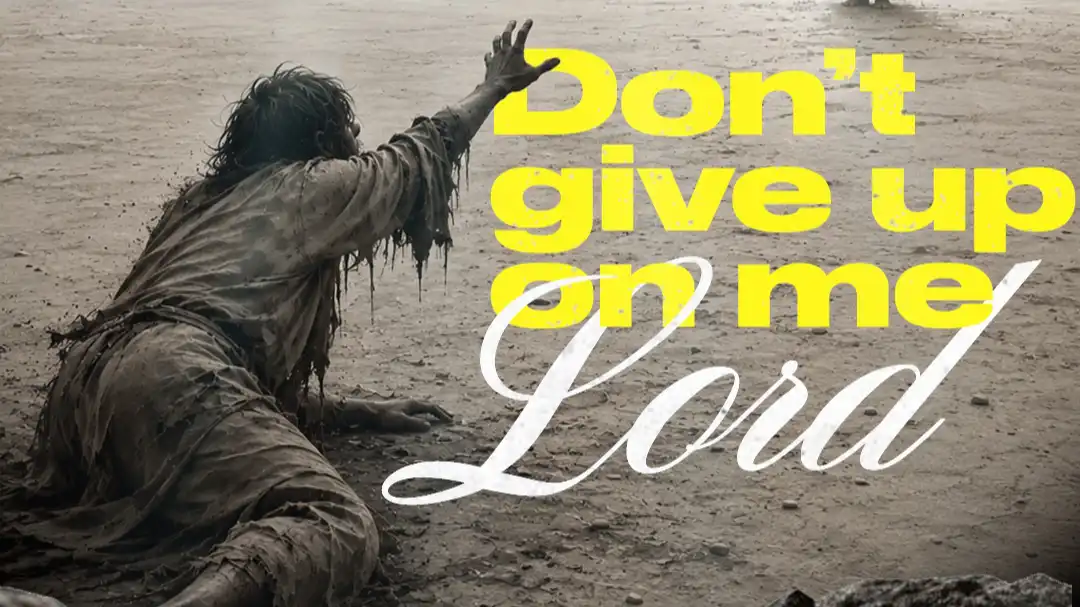
There are some words that never leave you.
Growing up, my principal was a man who believed deeply in discipline. He wasn’t interested in punishing students for the sake of punishment; he wanted to save destinies. Whenever he saw a student going down a dangerous path, he would plead passionately. But when repeated correction was ignored, his tone would change. Then he would utter a sobering Yoruba proverb:
“At first, a father says, ‘My child, don’t destroy me.’ But after refusing correction again and again, he says, ‘My child, don’t destroy yourself.’”
I did not understand the weight of those words then.
I do now.
There comes a point where love has warned, mercy has waited, patience has stretched itself, and correction has been offered over and over again. If a heart continually hardens itself against every call to repentance, the tragedy is no longer that God is unwilling to save, it is that the man no longer wants to be saved.
This thought takes me back to one of Rev. Austin Ukporhe’s timeless teachings on the chastening of the Lord. He explained that God’s discipline is never an act of rejection. Every rebuke, every correction, every restraint is evidence that He has not abandoned us. The Father’s rod is not meant to push us away but to pull us closer. Every chastening whispers, “I refuse to let you perish.”
How comforting that is.
But there is another side to Scripture that should make every believer tremble.
Romans tells us of people whom God gave over to a reprobate mind. Not because He lacked power to save them, but because they persistently rejected His voice until they were handed over to the consequences of the life they had chosen.
Perhaps one of the most frightening judgments in Scripture is not when God disciplines a man.
It is when He stops.
When Heaven becomes silent.
When conviction no longer pricks the conscience.
When sin no longer feels sinful.
When the Spirit no longer strives.
When God simply says, “Have it your way.”
That is a terrifying place to be.
The greatest evidence of God’s love is not merely His blessings. Sometimes it is His interruptions. His conviction. His refusal to let us be comfortable in compromise. His discipline is proof that He still calls us His own.
So maybe the cry of our hearts today should not merely be, “Lord, bless me.”
It should be:
“Lord, don’t stop insisting on me.”
Let Your Spirit interrupt me whenever I begin to drift.
Correct me before I become comfortable in error.
Break my pride before it destroys me.
Do not leave me alone with my own desires.
Let me never become a man You simply give over to himself.
These thoughts remind me of the heartfelt cry in Minister Theophilus Sunday’s song:
“Insist on me, O Lord.”
What a dangerous prayer.
Yet what a necessary one.
Because the greatest tragedy is not to be corrected by God.
The greatest tragedy is to be abandoned to yourself.
Dear heartchecker, are you still responding when God corrects you, or have you become so familiar with His warnings that they no longer move you?
May we never reach the point where Heaven says, “Don’t destroy yourself.”
May God continue to insist on us.